How I Would Invest in Property in 2026 and Beyond
(And why most people won’t)
Every property cycle creates its own myths.
In the last one, the myth was simple:
Buy a house. Add leverage. Wait.
That worked, not because it was smart, but because the system rewarded passivity.
That era is over.
Not temporarily.
Structurally.
So when people ask me “Is property still worth investing in?” my answer is always the same:
Yes… but only if you play a different game.
If I were starting today, or rebuilding a portfolio for 2026 and beyond, I would follow five rules. Miss one, and the model eventually breaks.

Rob Stewart Property
Rule 1: Passive appreciation is dead — value must be forced
The biggest mistake investors make is assuming accumulation phases reward patience.
They don’t.
They reward intervention.
In real terms, UK house prices have already corrected hard since interest rates rose. That doesn’t mean prices crash, it means time and inflation do the work while capital sits idle.
If your strategy relies on:
“Long-term growth”
“Rent inflation”
“The market coming back”
You’re not investing.
You’re waiting.
Every asset I would buy must have forced appreciation built in:
Change of use
Density uplift
Reconfiguration
Tenure transformation
Operational enhancement
If the value only goes up if the market rescues it, the deal is invalid.
Rule 2: Cashflow must be engineered through density — not leverage
Debt used to hide bad models.
It doesn’t anymore.
Low-density assets collapse under:
Higher interest rates
Void risk
Tax drag
Regulation
The new rule is simple:
Density is the new leverage.
Cashflow must be created inside the asset, not borrowed from the bank.
That means:
Multiple income lines per title
Income spread across users, not tenants
Assets that still work when rates stay higher for longer
If one tenant leaving breaks the model, the model is fragile.
I would only buy assets where cashflow is designed, not assumed.
Rule 3: Tax is a design variable — not an afterthought
“Just buy it in a limited company” is entry-level thinking.
Tax efficiency isn’t a structure problem.
It’s an asset selection problem.
What you buy determines:
How income is taxed
Whether allowances apply
How capital is treated
What exits are available
In 2026 and beyond, ignoring tax at acquisition is fatal.
I would actively look for:
Commercial vs residential arbitrage
Mixed-use advantages
Capital allowances
Structures & Buildings Allowance
Stamp duty efficiency
If tax efficiency relies on “sorting it later”, it will never be sorted.

Rule 4: Assets must be net contributors to housing supply
This is where ideology breaks.
The future is not about competing with first-time buyers for family homes.
That’s lazy capital.
The only models that survive politically and economically are those that expand usable housing stock:
Repurposing obsolete buildings
Converting underutilised commercial space
Creating housing types the open market doesn’t supply
Increasing density without sprawl
These assets don’t extract from the system.
They repair it.
And crucially — they attract capital when policy tightens elsewhere.

Rob Stewart Property
Rule 5: Speed beats perfection — time is the hidden risk
The biggest killer of returns in the next decade won’t be price.
It will be time.
Planning delays.
Construction inflation.
Multi-year timelines.
The old belief was:
Bigger projects = bigger rewards.
The new reality is:
Planning is broken
Build costs are volatile
Time magnifies every risk variable
I would favour:
Planning-light strategies
Reconfiguration over redevelopment
Operational change over structural change
Assets that move fast, not heroically
If a deal only works “once completed”, it’s already in trouble.
The uncomfortable conclusion

Most people will sit out this phase waiting for clarity.
Institutions won’t.
They’ll accumulate assets that:
Work in flat markets
Survive hostile policy
Compound when confidence returns
By the time sentiment flips, the best assets won’t be available.
They’ll already be owned.
Quietly built during the years everyone else spent arguing.
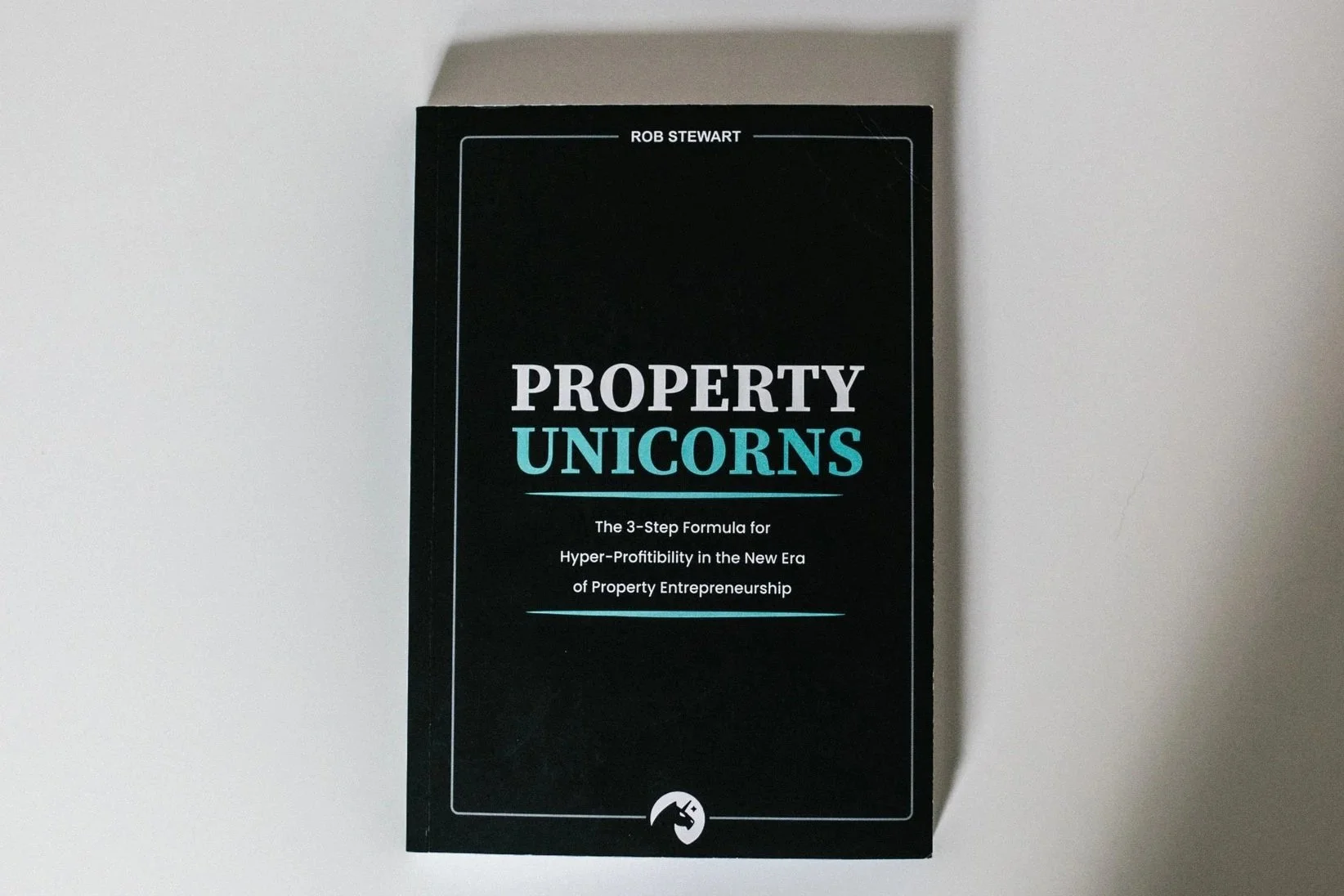
For a deeper exploration of these ideas
including frameworks like The Unicorn Model and Creator OS, get your copy of Property Unicorns and join the movement redefining what it means to build Britain’s future.