Budget 2025: The Moment the Old Property Game Ended, And Why the Next Era Belongs to the Operators
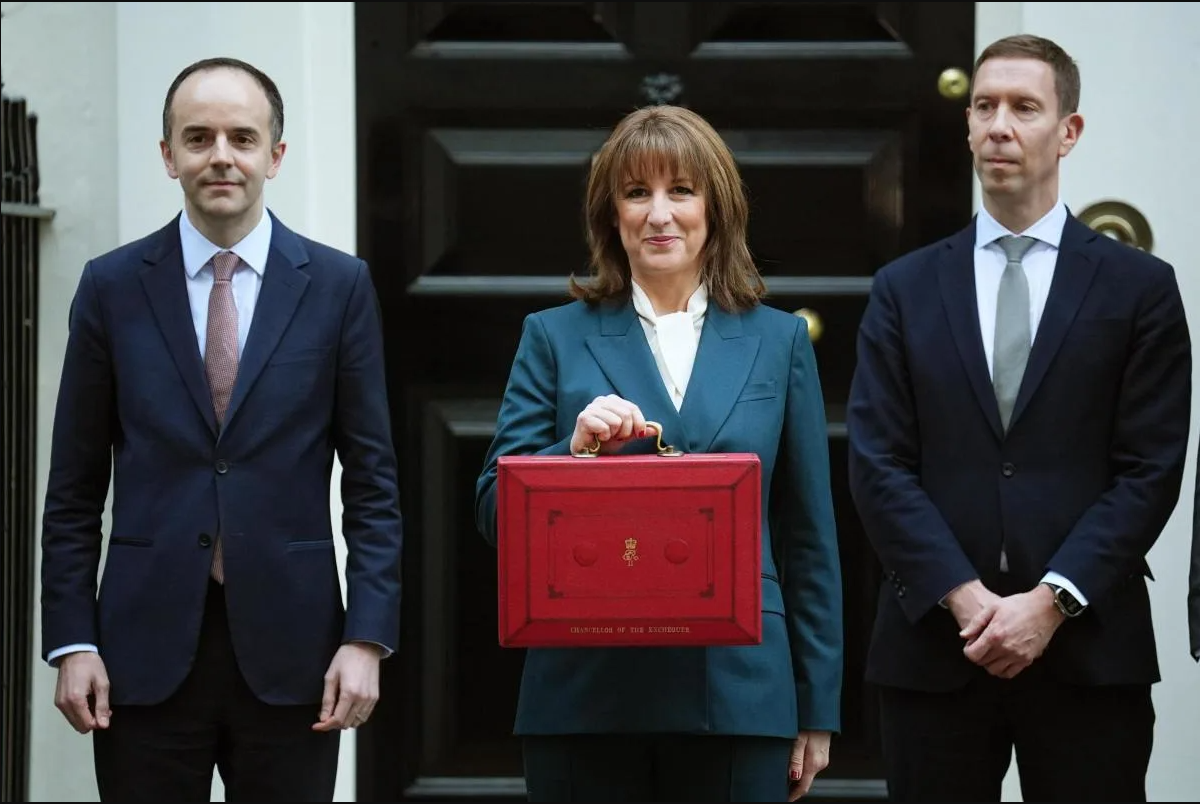
2025 Budget
The Budget has barely cooled, and already the usual storms of commentary are beginning to form, headlines without context, soundbites without analysis, outrage without understanding. Yet buried beneath the noise is something far more profound than a few changes to tax rates or reliefs.
Budget 2025 is not just another fiscal event. It is a declaration of intent. It signals a fundamental repositioning of how the UK treats work, capital, and, most importantly, the people who take risks to build businesses, homes, and prosperity. The changes aren’t simply financial. They’re philosophical. And if you’re a property entrepreneur, this Budget marks a turning point that has been quietly building for years.
A New Tax Architecture — and What It Really Means
For decades, the British tax system has been structurally biased toward salaried employment. What Budget 2025 does is complete a shift that’s been telegraphed for some time: the migration from taxing work to taxing wealth, or at least the version of wealth most accessible to ordinary people.
The headline example is the creation of a dedicated, higher-taxed category for property income. For the first time in modern UK history, rental income will sit in its own silo, taxed at levels that exceed comparable bands for earned income. Dividends will rise in 2026, savings income the year after, and council tax will now punish owners of £2m+ homes with a new “high-value” surcharge.
On the surface, the political narrative is familiar: this is about fairness. About ensuring that wealth contributes proportionately. About generating fiscal space after years of stagnation. But fairness is not a slogan. It’s a system. And this particular system raises a rather uncomfortable question. Because the people earning high volumes of rental income or pure UK dividends are rarely the ultra-wealthy.
Serious wealth is global, mobile, structured, and protected. Meanwhile, small landlords, professionals with a handful of assets, and SME business owners… the backbone of Britain’s entrepreneurial class, find themselves caught in a tightening net. It’s not the billionaire with offshore trusts who will feel this. It’s the couple with three rentals who built them slowly over twenty years. It’s the contractor who incorporated for flexibility. It’s the regional investor whose portfolio is their pension.
Budget 2025 doesn’t tax the rich. It taxes the aspirational.
The End of Passive Landlording
The most seismic shift in the Budget is the effective dismantling of the traditional buy-to-let model. The combination of higher property income tax rates, the ordering of reliefs that deprioritise landlords, and the cumulative impact of previous measures (like the erosion of mortgage interest relief) sends a clear message: Passive property investing is no longer welcome as a mainstream path.
The government’s theory is simple: passive rental income is unearned and therefore should be taxed more aggressively. But theory rarely collides neatly with reality. Because when you disincentivise small landlords, the people who step into the vacuum aren’t charities or social housing providers.
They’re institutions. Institutional landlords, build-to-rent conglomerates, REITs, pension funds, these are the players with the balance sheets to absorb tax changes, buy housing at scale, and shape markets. The Budget may end up accelerating a transition the public never voted for: the consolidation of the UK rental market into corporate hands.
The irony is stark. A government attempting to fix the housing crisis may inadvertently create a landscape where individuals have less ownership and less control over housing than ever before.

2025 Budget
The Squeeze on Entrepreneurs
The business owner sits at the intersection of this new tax architecture. Rising dividend tax, frozen thresholds, restricted salary sacrifices, each measure taken alone is survivable. But taken together, they represent the heaviest combined tax load on small business owners in decades. This matters, because property entrepreneurs exist in a unique hybrid space. They create homes and run companies. They generate rental income and operate businesses. They are both investors and employers.
Taxing them more heavily while simultaneously expecting them to regenerate high streets, convert commercial units, revitalise town centres, and deliver housing stock is a strategic contradiction.
You cannot simultaneously demand more from the people willing to take risks while making the act of taking risks less rewarding. Yet that is precisely what the 2025 Budget does.
The Great Contradiction: Build More, Tax More
This contradiction sits at the heart of the Budget.
On one hand, the government has laid out the most ambitious pro-housing agenda in over a decade. Reforming the NPPF, boosting planning capacity, hiring 350 new planners, targeting 1.5 million homes, accelerating infrastructure: these are serious, overdue commitments that speak to a nation in urgent need of new supply.
But supply does not create itself. Homes are not built by committees. They are built by entrepreneurs, people who take on risk, debt, planning uncertainty, operational challenges, and the volatility of markets.
And so we arrive at an unavoidable tension: You cannot tax the people you need to deliver national objectives and expect output to remain the same. If the goal is to build more homes, regenerate more towns, and revitalise more high streets, then you need more, not fewer, property entrepreneurs. You need individuals who are capable of reading markets, designing strategies, adding value, structuring deals, and delivering outcomes. Right now, the Budget helps the planning system but hinders the people who actually utilise it.
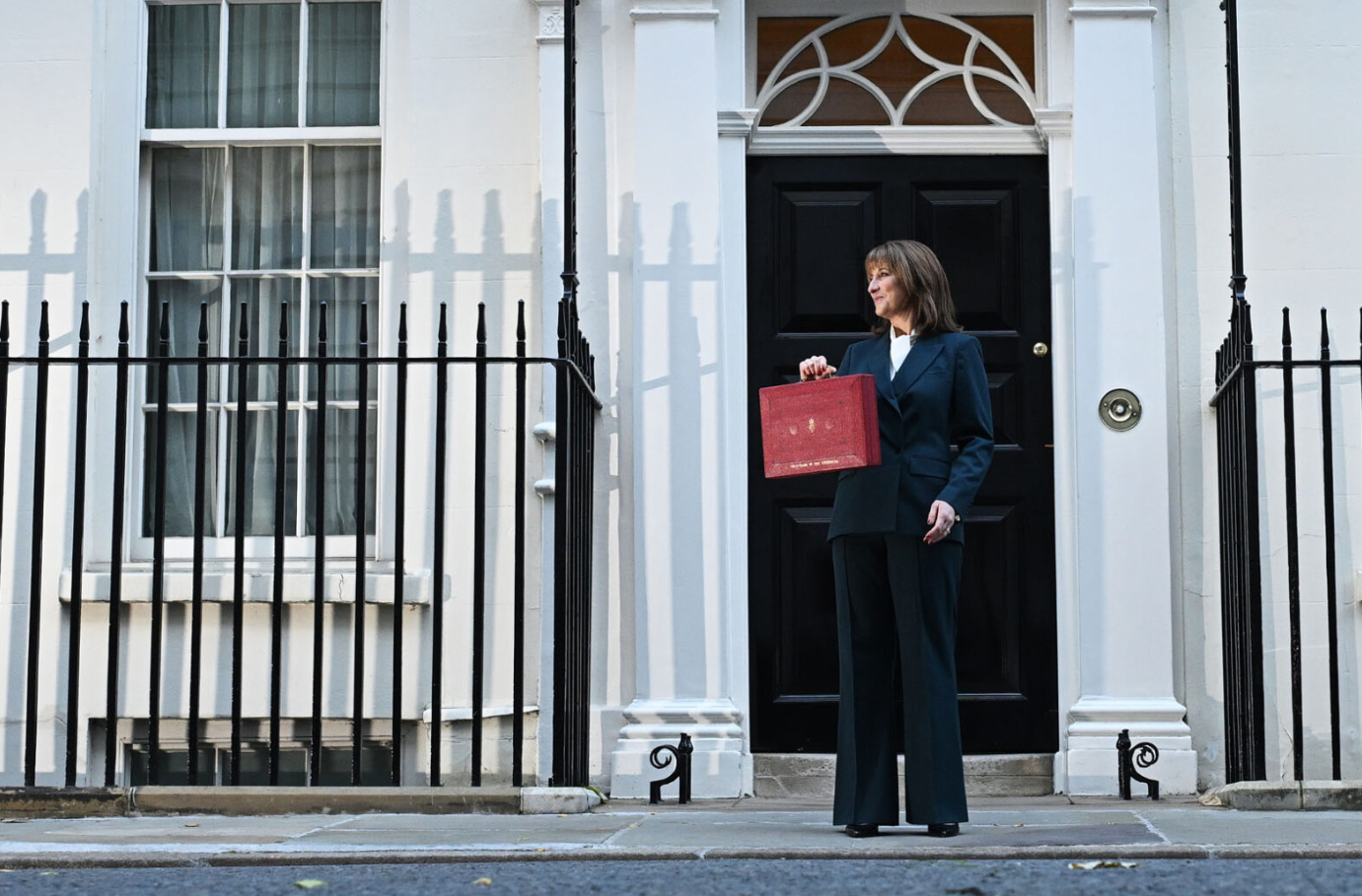
2025 Budget
The Winners, the Losers, and the Vacuum in Between
There will always be winners in any fiscal event. Institutional investors will continue to expand. Mixed-use developers will benefit from business rates support. Regeneration specialists will flourish. Operators with legitimate commercial models will do well. Those holding assets in sophisticated corporate structures will find themselves relatively insulated.
But the casual landlord, the owner of two or three rentals, the higher-rate taxpayer with property in personal name, these individuals will struggle to make the numbers work. And while some will leave the sector altogether, others will be absorbed into an increasingly corporatised rental market.
What emerges is a “barbell effect”: large institutions on one side, specialist operators on the other, with ordinary landlords squeezed out of the middle.
The Rise of the Operator — And the Proof That the Unicorn Model Was Always the Future
For years I’ve argued that the era of passive property income is ending. The sector has been moving towards a professionalised, value-add, operationally intensive model for some time. Budget 2025 simply accelerates what was already inevitable. High-yield strategies, mixed-use conversions, HMOs, serviced accommodation, FRI commercial deals, planning-led uplifts — these approaches do not rely on tax favourability to survive. They rely on skill, execution, structure, and operational excellence. They are the domain of the operator, not the landlord.
This is the heart of what I call the Property Unicorn: A model built not on speculative capital growth, but on the intelligent creation of value.
Budget 2025 doesn’t undermine that model. It validates it. It reinforces the idea that if you want to survive and thrive in this new environment, you cannot rely on passive income streams. You must be willing to think like an entrepreneur, structure like a business, operate like a professional, and create value in a way the tax system cannot erode.
A Constructive Challenge: What the Government Could Have Done Instead
It’s not enough to criticise; we must also offer solutions. The government could have chosen to reward quality landlords rather than chase them out of the market. It could have tied tax incentives to energy efficiency, standards, or long-term tenancies. It might have empowered small developers with fast-track planning for conversions, or offered tax reliefs for derelict-to-residential projects. It could have incentivised brownfield regeneration or created pathways for small operators to scale legally and responsibly.
None of these would have cost the taxpayer dramatically more. All of them would have accelerated supply, improved standards, and increased fairness.
But policy is often shaped more by moral narratives than economic reality. And the narrative of “taxing the landlords and the dividend-earners” plays well, even when the long-term effects are more complex. This is the conversation we should be having. Not just what the Budget does, but what it could have done.
Where Do Property Entrepreneurs Go From Here?
The answer is not to retreat. It is to adapt.
This is the moment to rethink personal structures, reassess portfolio strategies, and step firmly away from low-yield models that were already collapsing under their own weight.
It is the moment to build capability in planning, in operational management, in deal structuring, and in the commercial skills that distinguish a professional operator from a passive rent collector. The future belongs to those who can create value, not simply capture it. And that has always been the underlying truth of successful property entrepreneurship.
Conclusion: Clarity in the Chaos
Budget 2025 is not a catastrophe. Nor is it a triumph. It is clarity.
It clarifies who the system wants, who it doesn’t, and who will be reshaped in the years to come. It clarifies that the old property game, the easy one, the passive one, the speculative one, is over. And it clarifies that the entrepreneurial, operational, value-driven model is no longer optional.
It is the only model left standing.
And for those willing to embrace that shift, the opportunities ahead are not simply intact… they are expanding.
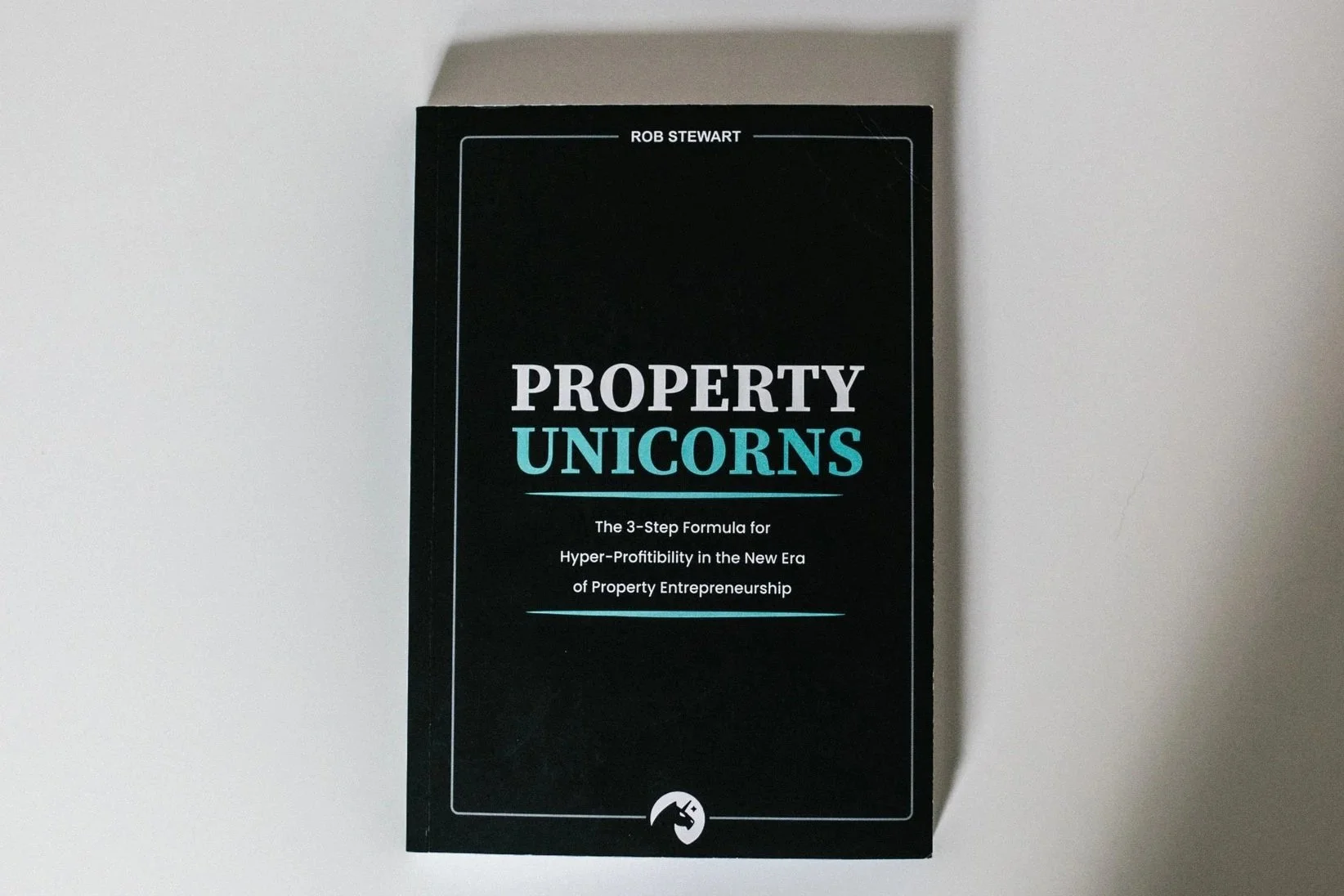
For a deeper exploration of these ideas
including frameworks like The Unicorn Model and Creator OS, get your copy of Property Unicorns and join the movement redefining what it means to build Britain’s future.